
Customer support
Patient · Reassuring · Knowledgeable
Give your script a voice.
Patient · Reassuring · Knowledgeable

Immersive · Nuanced · Warm

Dramatic · Expressive · Memorable

Give a script scene-matched narration, from explainers and advertisements to stories made for a screen.
Shape longer stories with lifelike pacing, character changes, and room for emotion.
Find a distinctive voice for games, animation, dialogue, and interactive stories.
From a quick line of narration to a larger voice workflow, explore ways to bring speech into what you build.

Turn written words into expressive spoken moments.

Make spoken content easier to read and work with.

Put a voice into a conversation.

Explore a recognizable voice identity.

Think about your audience beyond one language.
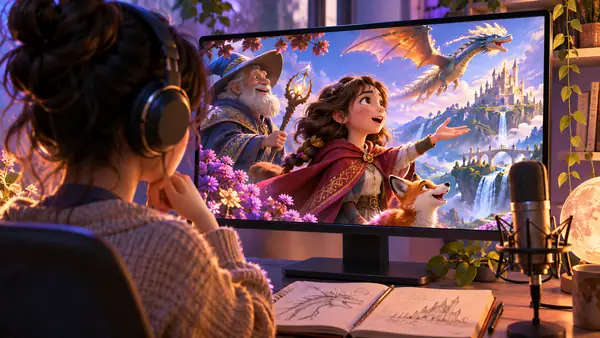
Give animated short stories a voice that fits their world.
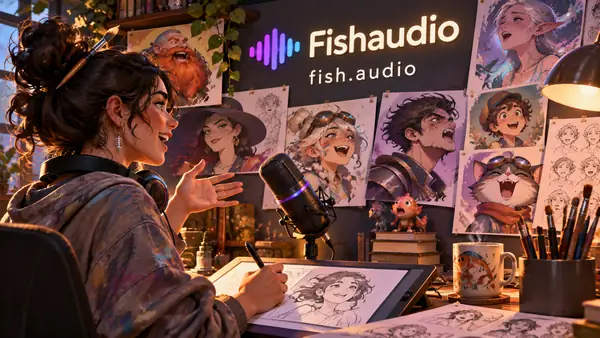
Bring characters into a scene through distinctive dialogue.

Give a video narration that carries its point of view.

Let an audiobook find its rhythm and atmosphere.

Explore voice directions for the next thing you make.
A voice should do more than pronounce the words. Pacing and expression are what make a story worth hearing.
For storytellers
The right tone helps an explanation feel clear, familiar, and genuinely useful to the person listening.
For educators
A memorable character voice can give a scene its personality before the next line even begins.
For makers
From an opening sentence to a longer script, a consistent voice makes the whole project feel connected.
For creative teams
A voice for the story you want to tell
From creative storytelling and dynamic advertisements to immersive narration, voice opens up different ways to connect with an audience.
Bring images, video, characters, and voice together
A project can begin with a line of dialogue, a visual idea, or a scene. Explore the voice that helps it come together.
Explore creative voices





An AI voice can help you explore narration for videos, dialogue for characters, spoken explanations, and other projects where the way words sound matters.
Text to speech turns written text into spoken audio. Start with a short script, then explore the voice and delivery that suit its meaning.
A tutorial, documentary, advertisement, and fictional scene may each call for a different pace and tone. Your script is a useful place to begin choosing one.
Expression comes from more than a character's words. Pauses, emphasis, pacing, and the feeling behind a line all shape how it is heard.
Yes. Write a few lines in the workspace above, or select an example to carry a starting idea to the voice-creation destination.
Think about who is listening and what they should feel. A calm explanation may need a different delivery from a suspenseful story.
The buttons on this page take you to the voice-creation destination. This page introduces ideas; it does not generate audio itself.